

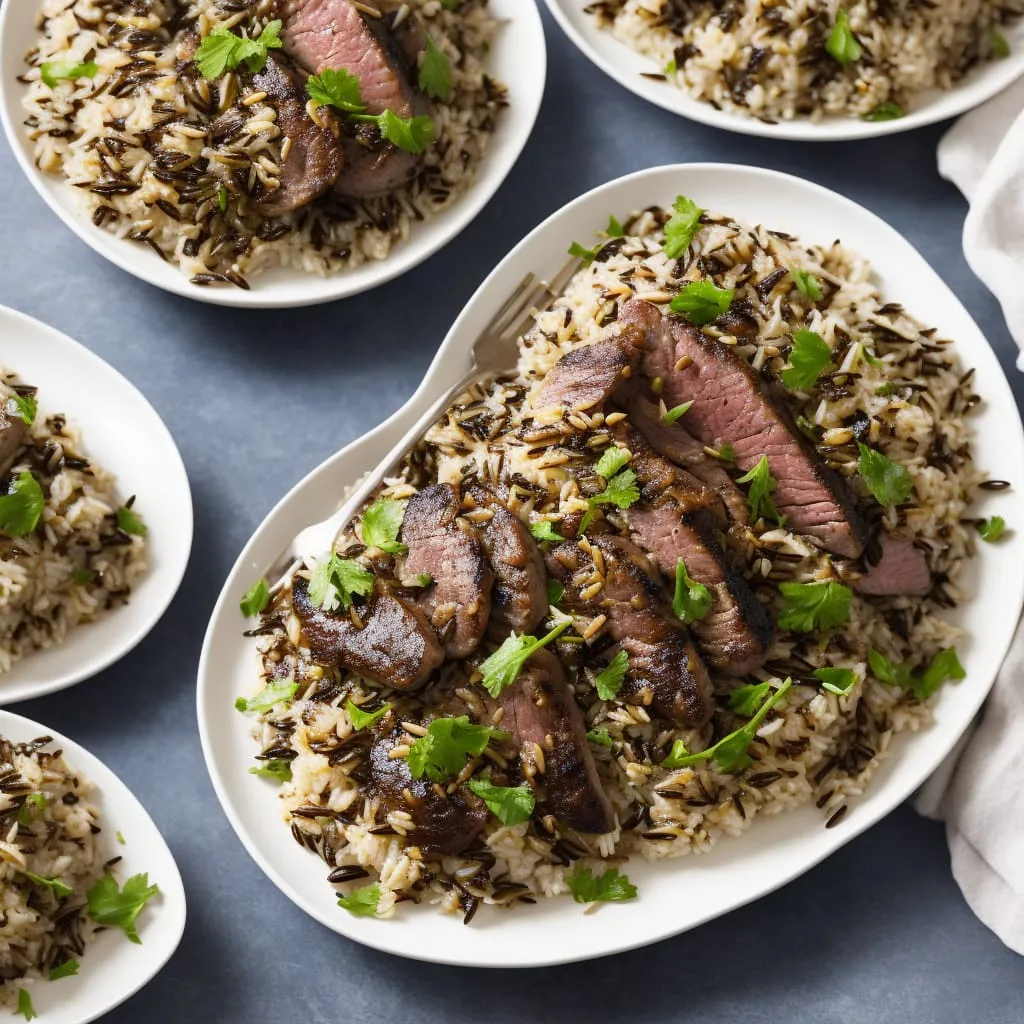
Prepare to transform your ordinary dinner into a gourmet masterpiece that will transport your taste buds straight to the sophisticated kitchens of France! This extraordinary duck breast recipe combines the rich, luxurious flavor of perfectly seared duck with a delicate wild rice pilaf that promises to elevate your home cooking from mundane to magnificent. Whether you're looking to impress dinner guests or treat yourself to a restaurant-quality meal, this recipe is your ticket to culinary stardom.
Prep Time: 15 mins
Cook Time: 35 mins
Total Time: 50 mins
Cuisine: French
Serves: 4 servings
Ingredients
- 4 duck breasts
- 1 cup wild rice
- 2 cups chicken broth
- 1 onion, chopped
- 2 cloves garlic, minced
- Salt and pepper to taste
Instructions
- Remove duck breasts from refrigerator 30 minutes before cooking to bring to room temperature. Pat duck breasts dry with paper towels and score the skin in a crosshatch pattern, being careful not to cut into the meat.
- Season duck breasts generously with salt and freshly ground black pepper on both sides, ensuring even coverage.
- Place a large, heavy-bottomed skillet over medium-low heat. Place duck breasts skin-side down and cook slowly to render the fat, approximately 8-10 minutes. The skin should become golden brown and crispy.
- While duck is cooking, prepare the wild rice pilaf. In a medium saucepan, sauté chopped onions and minced garlic in a small amount of duck fat or olive oil until translucent.
- Add wild rice to the onion and garlic mixture, stirring to coat the grains. Pour in chicken broth, bring to a boil, then reduce heat and simmer covered for 45-50 minutes until rice is tender and liquid is absorbed.
- After skin is crispy, flip duck breasts and cook for an additional 4-5 minutes for medium-rare. Remove from pan and let rest on a cutting board, tented with foil.
- Slice duck breasts against the grain into thin, elegant slices. Serve atop the wild rice pilaf, drizzling any accumulated juices over the dish.
- Garnish with fresh herbs like thyme or parsley if desired, and serve immediately while duck is still warm and skin remains crisp.
Tips
- Temperature is Key: Always let duck breasts come to room temperature before cooking to ensure even heat distribution.
- Scoring Technique: When creating crosshatch patterns on the skin, use a sharp knife and cut just through the fat layer, not into the meat. This helps render fat and create that irresistibly crispy skin.
- Low and Slow Rendering: Cook duck skin-side down on medium-low heat to slowly and evenly render the fat, which creates a golden, crisp exterior.
- Rest Your Meat: After cooking, always let duck breasts rest for 5-7 minutes. This allows juices to redistribute, ensuring a moist and tender result.
- Check Doneness: For medium-rare, aim for an internal temperature of 135°F (57°C). Use a meat thermometer for precision.
- Save That Duck Fat: The rendered fat is liquid gold in cooking - save it for roasting vegetables or making incredible potatoes.
Nutrition Facts
Calories: 607kcal
Carbohydrates: g
Protein: g
Fat: g
Saturated Fat: 14g
Cholesterol: 170mg
