

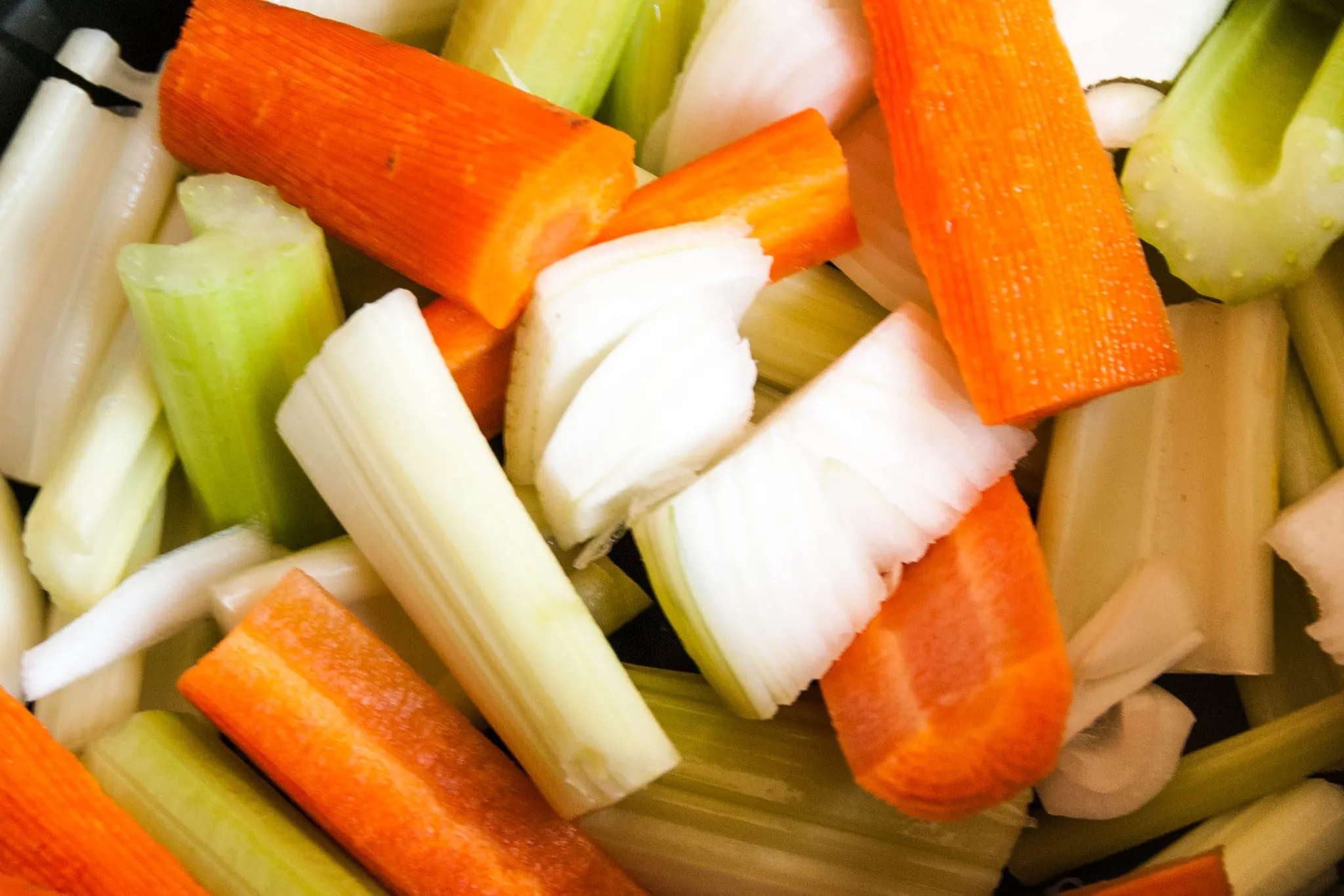
Imagine transforming your kitchen scraps into a delicious, aromatic vegetable stock that elevates your soups and stews to gourmet status! With just a few simple ingredients and a little bit of time, you can create a rich and flavorful stock that not only reduces waste but also enhances your culinary creations. This "Vegetable Stock from Kitchen Scraps" recipe is not only budget-friendly but also a sustainable choice for any home cook. Ready to discover how easy it is to make your own stock? Let’s dive into this delightful recipe that promises to bring depth and character to your dishes!
Prep Time: 10 mins
Cook Time: 1 hrs
Total Time: 1 hrs 10 mins
Cuisine: Vegetarian
Serves: 4 quarts
Ingredients
- Vegetable scraps (onion peels, carrot tops, celery leaves)
- 2 carrots, chopped
- 2 celery stalks, chopped
- 1 onion, quartered
- 2 cloves garlic, smashed
- Water to cover
- Salt to taste
Instructions
- Begin by collecting your vegetable scraps. This can include onion peels, carrot tops, celery leaves, and any other leftover vegetable trimmings you have on hand. Rinse them under cold water to remove any dirt or debris.
- Prepare the fresh vegetables: chop the 2 carrots and 2 celery stalks into large chunks. Quarter the onion and smash the garlic cloves with the flat side of a knife to release their flavor.
- In a large stock pot, combine the vegetable scraps, chopped carrots, chopped celery, quartered onion, and smashed garlic. Make sure to distribute the ingredients evenly throughout the pot.
- Fill the pot with enough water to cover all the vegetables and scraps by about an inch. This typically requires around 12-16 cups of water, depending on the size of your pot.
- Place the pot on the stove over medium-high heat and bring the water to a boil. Once boiling, reduce the heat to low to maintain a gentle simmer.
- Allow the stock to simmer uncovered for about 1 hour. During this time, the flavors from the vegetables will infuse into the water, creating a rich and flavorful vegetable stock.
- Check the stock occasionally, stirring gently to ensure nothing is sticking to the bottom of the pot. If needed, add more water to keep the ingredients submerged.
- After 1 hour, remove the pot from heat. Let the stock cool slightly before straining it through a fine-mesh sieve or cheesecloth into another large pot or bowl. Discard the solids.
- Taste the stock and season with salt to your preference. Start with a small amount and adjust as needed.
- Once seasoned, allow the stock to cool completely before transferring it to airtight containers. Store in the refrigerator for up to a week or freeze for longer storage.
- Your homemade vegetable stock is now ready to use in soups, stews, risottos, or any recipe that calls for broth!
Tips
- Collect Wisely: Keep a container in your fridge to collect vegetable scraps throughout the week—think onion peels, carrot tops, and celery leaves. This not only saves money but also adds unique flavors to your stock!
- Freshness Matters: While using scraps is great, don’t forget to include some fresh vegetables like carrots, celery, and onions. They will enhance the flavor profile of your stock.
- Water Level: Ensure the water covers the vegetables by about an inch. This helps extract maximum flavor during the simmering process.
- Simmer Gently: After bringing the pot to a boil, reduce the heat to low and let it simmer gently. A rolling boil can make the stock cloudy, while a gentle simmer will keep it clear and flavorful.
- Taste as You Go: Don’t forget to taste your stock before adding salt. The flavors will develop as it simmers, and you want to adjust the seasoning just right!
- Strain Well: When straining, use a fine-mesh sieve or cheesecloth to ensure a clear stock without any floating bits.
- Storage Tips: After cooling, store your vegetable stock in airtight containers. It can be refrigerated for up to a week or frozen in ice cube trays for easy use in future recipes.
- Versatile Use: Use your homemade stock as a base for soups, risottos, sauces, or even to cook grains. The possibilities are endless!
Nutrition Facts
Calories: 7kcal
Carbohydrates: g
Protein: g
Fat: 0g
Saturated Fat: 0g
Cholesterol: 0mg
